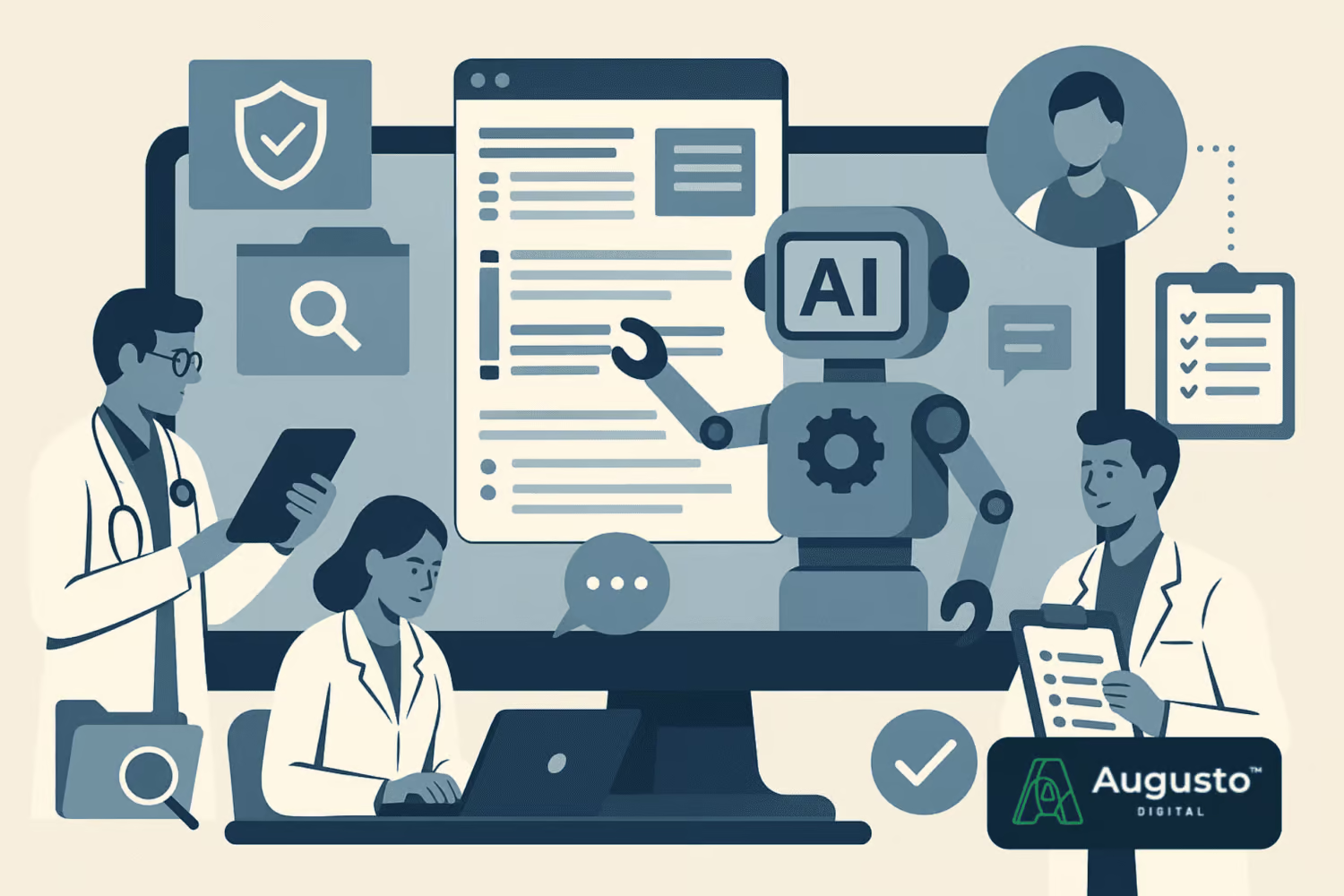
Healthcare organizations today face unprecedented challenges in content management. On one hand, teams must maintain HIPAA compliance across thousands of web pages. On the other, they must deliver timely, personalized information to patients and providers. As a result, marketing and operations teams often struggle to keep pace. Fortunately, artificial intelligence (AI) is emerging as a powerful solution. When applied thoughtfully, AI is transforming how healthcare organizations create, manage, and optimize content.
Below are five key ways AI is reshaping healthcare content management.
1. Automating Content Creation and Updates
AI technology is streamlining the content creation process across healthcare organizations. By analyzing existing content and understanding healthcare terminology, AI can:
- Generate accurate first drafts of service descriptions, patient education materials, and blog posts while maintaining medical accuracy and compliance standards. For example, a hospital system can automatically create consistent procedure descriptions across multiple department pages in minutes rather than hours.
- Automatically update repetitive content, such as FAQs or procedural descriptions, ensuring consistency across all platforms and reducing manual effort in maintaining routine content.
- Maintain brand voice and style guidelines across all content, ensuring consistency whether the material is intended for patients, providers, or administrative staff.
- Combine AI-driven automation with human expertise to ensure content remains not only accurate but also empathetic and contextually relevant. By leveraging AI as an assistive tool rather than a replacement, healthcare organizations can ensure their content remains high-quality while benefiting from efficiency improvements.
2. Enhancing Content Organization and Consolidation
Large healthcare organizations often struggle with content sprawl across multiple websites, intranets, and knowledge bases. AI brings order to this chaos by:
- Identifying and flagging duplicate or similar content across platforms, enabling teams to consolidate information and maintain a single source of truth. For instance, when procedure guidelines are updated, AI can locate all related content that needs revision.
- Creating intelligent content taxonomies that improve navigation and searchability, making it easier for both patients and staff to find the information they need quickly.
- Monitoring content freshness and automatically flagging outdated materials for review, ensuring all patient-facing information remains current and accurate.
3. Personalizing Content for Different Audiences
Healthcare content must serve diverse audiences with varying medical literacy needs and levels. AI enables sophisticated content personalization by:
- Analyzing user behavior patterns to deliver relevant content recommendations based on patient demographics, medical conditions, or professional roles.
- Automatically adjusting content complexity and terminology for different audiences – using more straightforward language for patient materials while maintaining technical accuracy for provider resources.
- Generating location-specific content variations that account for regional health concerns, local services, and facility-specific information while maintaining brand consistency.
Recent studies in healthcare marketing have shown that organizations using AI for content personalization are seeing measurable improvements in patient engagement and marketing ROI.
4. Streamlining Regulatory Compliance
Maintaining compliance in healthcare content is critical and complex. AI serves as a powerful compliance assistant by:
- Scanning content in real-time for potential HIPAA violations, protected health information exposure, or other regulatory risks before publication.
- Automating the compliance review workflow by routing content to appropriate reviewers based on risk level and content type.
- Maintaining detailed audit trails of content changes and approvals, simplifying documentation for regulatory requirements.
5. Improving Data-Driven Decision Making
AI transforms raw content performance data into actionable insights, helping healthcare organizations optimize their content strategy through:
- Advanced analytics that track content effectiveness across patient journey touchpoints, from initial symptom searches to post-care feedback.
- Predictive modeling that identifies emerging health topics and information needs based on search trends and patient inquiries.
- Automated performance reports that help teams understand which content types and topics drive the most meaningful patient engagement.
According to recent industry analysis, healthcare organizations leveraging AI for predictive analytics are better positioned to anticipate patient needs and optimize their content strategies.
Conclusion
Ultimately, the future of healthcare content management depends on the intelligent use of AI. When applied strategically, AI enables more efficient operations while delivering personalized, compliant, and effective communication.
However, success requires more than adopting new tools. Instead, organizations must use AI to enhance human expertise and creativity, not replace it. By starting with clear content challenges and introducing AI solutions incrementally, healthcare teams can maintain the human touch patients expect..
Want to see how AI can streamline your content operations? Learn more about our Custom GPT solutions at https://augusto.digital/offers/custom-gpt
Let's work together.
Partner with Augusto to streamline your digital operations, improve scalability, and enhance user experience. Whether you're facing infrastructure challenges or looking to elevate your digital strategy, our team is ready to help.
Schedule a Consult