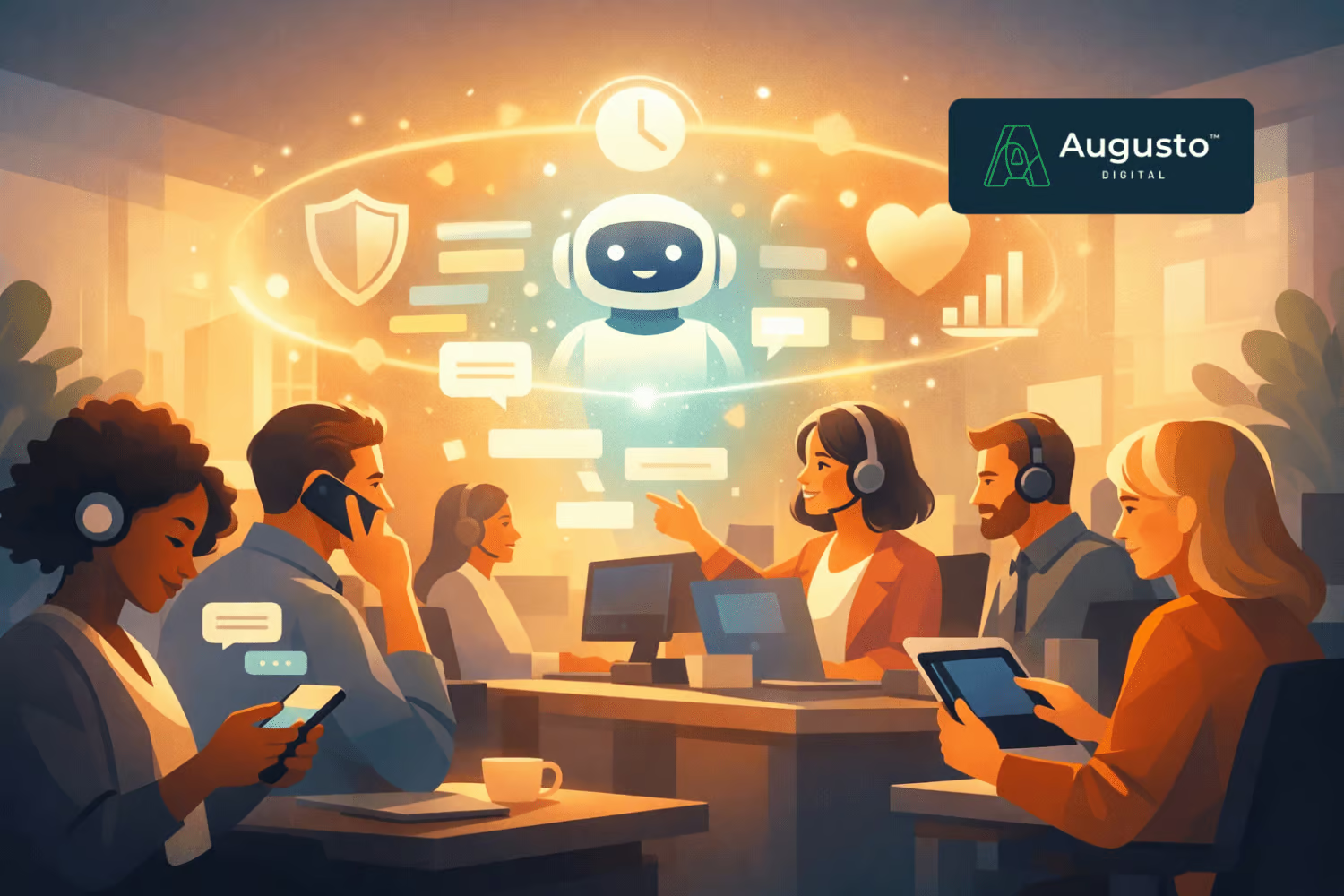
Customers no longer compare you to your closest competitor. They compare you to the best experience they had last week: fast, clear, and easy.
Teams across industries are leaning into AI because it removes friction in the moments that matter. 65% of CX leaders see AI as a strategic necessity.
The goal is to shorten the path to help and give your people more room to show up with empathy and judgment.
How does AI deliver faster 24/7 customer support?
AI-powered conversational support (chat, voice, in-app) can handle high-volume questions anytime. Make it great at repeatable needs and route quickly to a human for nuance.
- Do: Start with a narrow set of intents such as order status, password resets, scheduling, returns, and policy questions.
- Do not: Pretend it can solve everything.
Augusto Digital helped Boston Children’s Hospital use an AI chatbot as a “digital front door” for patient inquiries. In benchmarks, average handle time drops by 27%, customer satisfaction rises by ~30%, and over 80% of customers report a positive experience with AI support.
How can AI automate routine customer service tasks to reduce effort and errors?
Some of the biggest CX gains happen behind the scenes. AI can route tickets, extract information from documents, draft updates, and prefill data across systems. The result is less repetitive work for customers and fewer handoffs for teams.
- Insurance: Triage claims intake and flag missing information early.
- Manufacturing: Streamline RMAs, warranty workflows, and parts support.
- Higher education: Reduce enrollment delays caused by manual follow-ups.
- Healthcare: Improve scheduling, pre-visit instructions, and referral routing.
How can AI personalize customer interactions at scale without feeling invasive?
Personalization should feel like a helpful memory, not surveillance. It should feel helpful, not creepy.
Use AI to tailor onboarding, recommendations, and support guidance, but only when it is earned.
- Transparency: Explain when and why an experience is being tailored.
- Consent and control: Make it easy to opt out or adjust preferences.
- Data minimization: Use the smallest data set needed to help.
- Human gut-check: If it would feel wrong from an employee, it will feel wrong from AI.
These align with ethical AI personalization principles.
How can AI predict customer needs and prevent issues before they happen?
Reactive service is expensive. Proactive service can be a competitive advantage. Proactive service becomes a real competitive advantage.
AI can spot patterns across tickets, usage drop-offs, reviews, and operational signals so you can act earlier.
- Logistics: Send delay messages with clear options and next steps.
- B2B SaaS: Offer in-product guidance when users appear stuck.
- Manufacturing: Trigger service reminders based on usage and wear.
- Financial services: Flag friction in onboarding and disputes.
How does AI help customer service teams work faster and more consistently?
AI can support agents without replacing them. It can summarize history, surface knowledge, draft responses for review, and suggest next steps based on policy and context. This reduces cognitive load and improves consistency.
A practical lens is that agent experience is customer experience.
How can AI monitor customer sentiment and service quality across channels?
Most teams can only sample interactions. AI can monitor calls, chats, emails, and reviews at higher coverage to spot risk earlier: compliance misses, negative sentiment, escalation signals, and trending issues. In some deployments, customer complaints drop by 65%.
Pair monitoring with human review for judgment calls, and track it with KPI metrics for AI quality monitoring.
How do you combine AI and human support to build customer trust?
Trust comes from clear boundaries and easy escalation. Design for human takeover moments.
- High emotion: Angry, distressed, or vulnerable customers.
- High stakes: Financial impact, safety, or eligibility decisions.
- High ambiguity: The system is not confident.
- High-value relationships: VIP customers or strategic accounts.
Summary: Leveraging AI for Customer Experience
AI can make help faster, journeys smoother, and service more consistent while without losing the human moments customers remember.
If you want a practical starting point, pick one high-volume journey, define success metrics, build trust guardrails, and iterate weekly based on what customers and agents actually do.
Schedule Meeting with an Augusto consultant.
Let's work together.
Partner with Augusto to streamline your digital operations, improve scalability, and enhance user experience. Whether you're facing infrastructure challenges or looking to elevate your digital strategy, our team is ready to help.
Schedule a Consult