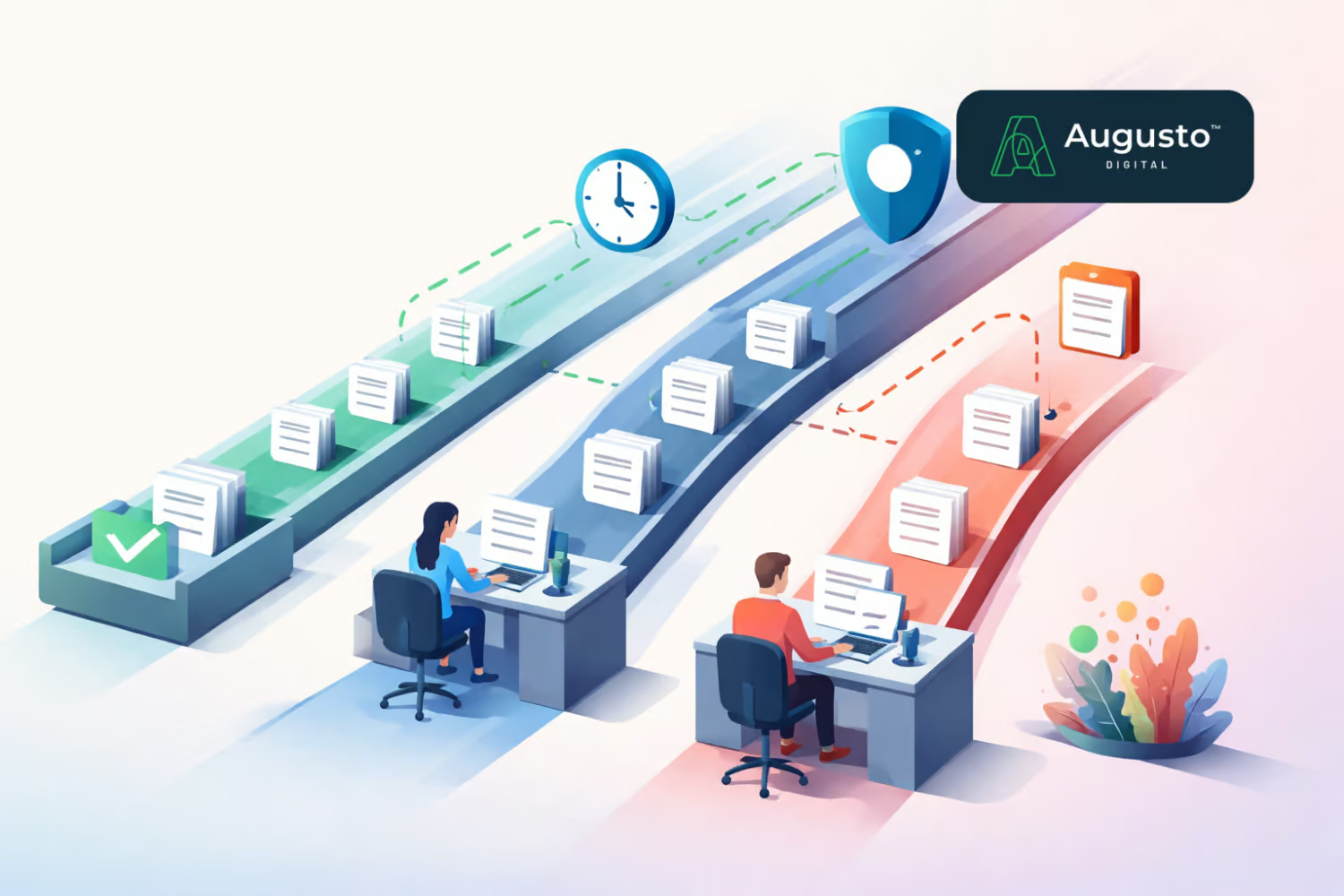
Human review keeps automation and AI safe. But if you treat review like a manual step, it will slow delivery.
The fix is to design review as a system. Route only true exceptions, make decisions fast, and use outcomes to reduce future review.
Watch this video on rapid workflow prototyping and identifying ROI.
The Problem With “More Reviewers”
At low volume, review feels simple. At scale, it creates:
- growing queues and missed timelines
- inconsistent decisions across reviewers
- rushed approvals and higher risk
- reviewer burnout
You do not need bigger queues. You need better workflow design.
What a Human Review Workflow Is
Human review is a decision system inside delivery. A complete design includes:
- Triggers: what enters review and why
- Routing: who sees it
- Decision rights: who can approve, reject, or escalate
- Evidence: what reviewers need to decide quickly
- SLAs: how fast decisions must happen
- Audit trail: what was decided, by whom, and why
- Feedback loops: how outcomes improve the system
The Goal: Review Exceptions, Not Everything
Scalable teams use one rule:
Humans review exceptions. Systems handle the routine.
You should keep pushing the boundary of what is routine, without increasing risk.
Step 1: Define Risk So People Can Apply It Fast
Most teams define risk in vague terms. Instead, use two simple factors:
Use a plain rubric that fits on one page. Then apply a simple rule:
- If impact is high, escalate.
- If uncertainty is high, escalate.
- If both are low, let it pass through.
Step 2: Prevent Backlog With Flow and WIP Limits
Review queues behave like any flow system. Little’s Law explains why the backlog grows when arrivals outpace completions.
Do three things:
- measure how many items enter review per day
- measure how many items reviewers can complete
- set a work in progress limit for the queue
Then set SLAs per risk level. Define SLAs like product SLOs. A good reference is Google’s SRE guidance on service level objectives.
Finally, add auto escalation when SLAs breach. Treat escalation like an operational policy. See an escalation policy example from Google Cloud and SRE on-call practices.
Step 3: Speed Up Decisions by Designing the Evidence
Most review time is spent hunting for context. Reduce that effort.
Design the reviewer view so a person can decide in one screen:
- the decision question at the top
- the few signals that explain why it is in review
- only the relevant context, not the full record
- a clear suggested action, if allowed, with confidence and limits
If reviewers need multiple tabs, the workflow is leaking time.
Step 4: Clarify Decision Rights With RACI
Confusion slows everything down.
Define roles per review level using a lightweight RACI model:
- Responsible: completes the review
- Accountable: owns the final decision
- Consulted: can be pulled in
- Informed: needs visibility
Then enforce it in the tooling. For example, restrict who can finalize high-impact decisions.
Step 5: Build Auditability Into the Workflow
In regulated and high-stakes work, decisions must be traceable.
Capture these fields by default:
- what happened (approve, reject, escalate)
- why it happened (reason category and short notes)
- what evidence was used (signals and references)
- who decided and when
- what policy or rule applied
This aligns with broadly accepted security practice. For a solid reference, see NIST log management guidance.
Step 6: Close the Loop So Review Volume Drops
Human review should make the system better over time.
Treat review outcomes as learning signals. This aligns with the human-in-the-loop pattern.
Run a simple cadence:
- weekly: top reasons items entered review and the fixes
- monthly: tune thresholds, routing rules, and SLAs
- quarterly: update policy and governance decisions
If the exception volume never falls, review has turned into permanent rework.
Cross-Industry Examples
These patterns apply across industries. Only the triggers and evidence change.
- Manufacturing: quality deviations and sensor anomalies
- Finance and insurance: fraud signals and policy exceptions
- Retail and eCommerce: refund anomalies and chargeback risk
- Logistics: document mismatches and route exceptions
- Healthcare: prior authorization mismatches and coding anomalies
A Simple Starting Plan
If you are early or stuck, start here:
Let's work together.
Partner with Augusto to streamline your digital operations, improve scalability, and enhance user experience. Whether you're facing infrastructure challenges or looking to elevate your digital strategy, our team is ready to help.
Schedule a Consult