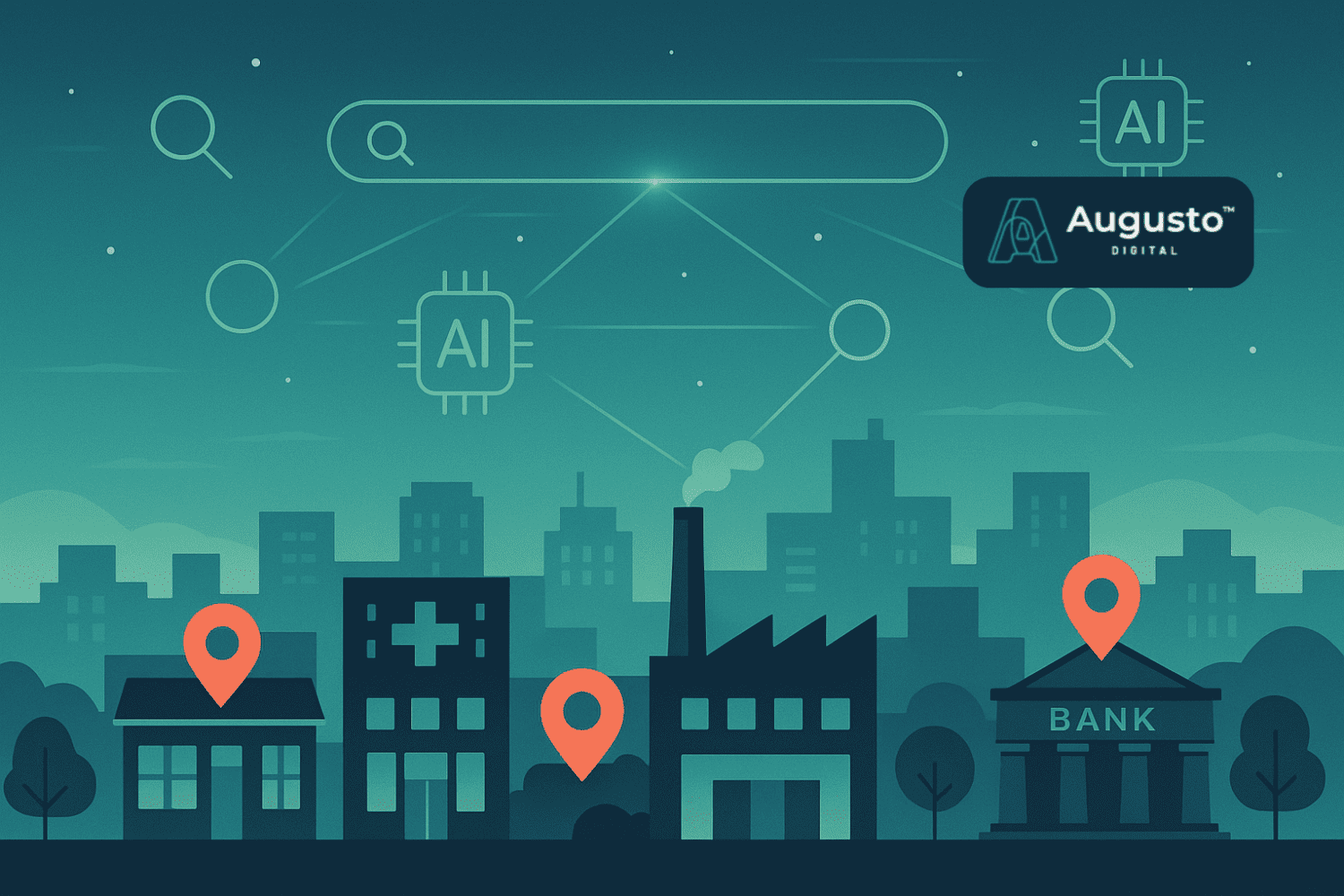
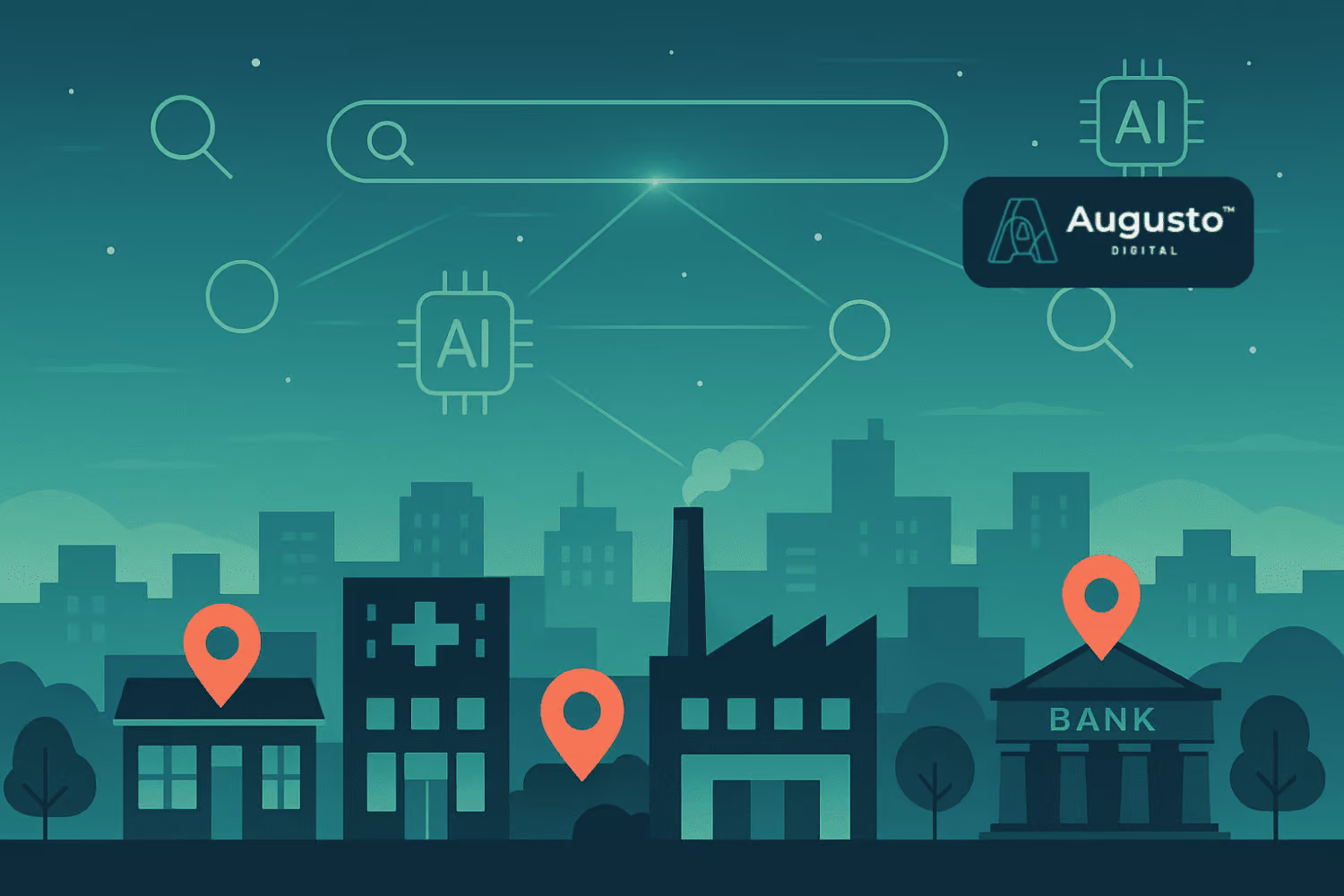
Regional leaders in healthcare, manufacturing, financial services, education, nonprofit, and B2B services are facing the same reality:
Buyers are searching differently, but we still need to show up when it matters most.
For years, local SEO was the playbook. You showed up on maps, kept listings accurate, earned reviews, and made sure near me searches pointed to you. AI is changing local search behavior faster than many regional brands expect.
Now AI assistants and generative search experiences can answer questions like “Who is the best service provider in this region?” with a single synthesized response. Whether your brand appears in that answer depends on how well you perform in GEO, or Generative Engine Optimization. GEO vs. SEO is increasingly framed as the next evolution in digital discoverability as AI powered search experiences become mainstream.
This article explains what local SEO and GEO are, how they differ, why regional brands need both, and how to get started without a new team or budget.
What Is Local SEO for Regional Brands?
Local SEO is how people find real world businesses in a specific area.
At its core, local SEO is about:
- Making your locations easy to find in search and map apps
- Helping nearby customers discover you when they are ready to act
- Building trust with reviews, photos, and consistent information
When local SEO works, your organization appears in Google Business Profile, map results, the local 3 pack above organic results, and key review platforms in your industry.
Even in an AI heavy world, local intent is still very human:
- Someone opens Google Maps to find an urgent care clinic or credit union branch
- A facilities director types HVAC service near me when there is a system failure
Local searches are tied to urgency, proximity, and real world action. Local SEO is still thriving in the AI first search era for queries with clear local intent.
For regional organizations, local SEO is still the baseline. It helps people who are ready to act find you quickly and confidently.
Local SEO vs. GEO: Key Differences for Regional Brands
Local SEO and GEO are related but focus on different audiences and outcomes. Marketers are already mapping how GEO reshapes keyword strategy, content formats, and measurement compared to traditional SEO.
Who you optimize for
- Local SEO focuses on humans in a place who scan maps, reviews, and search results before making a near term decision.
- GEO focuses on machines and the humans they advise. Your first reader is the AI that interprets, trusts, and summarizes your content.
Primary goal
- Local SEO aims to drive calls, appointment requests, quote forms, and in person visits.
- GEO aims to earn influence and inclusion. You want AI systems to mention your brand, describe your expertise accurately, and surface your content when users click for more detail.
You can think of local SEO as getting picked from the shelf and GEO as making sure you are on the shelf when the AI arranges the options.
What you optimize
Local SEO focuses on:
- Complete, accurate Google Business Profiles and other listings
- Consistent name, address, and phone data
- Location specific keywords
- Fast, mobile friendly landing pages
- Local backlinks and mentions
GEO focuses on:
- Clear, well structured content that answers real questions
- Schema and structured data for locations, services, and FAQs
- In depth resources such as guides, case studies, and explainers
- Conversational, question friendly language
Why Regional Brands Need Both Local SEO and GEO
Regional organizations compete inside specific geographies and often inside narrow niches. That is where local SEO and GEO together are most powerful.
Local SEO wins I need help now moments. These include searches like same day imaging near me, industrial electrical contractors in this region, or community banks that offer treasury services in a certain city. When intent is urgent and local, maps and local packs still dominate. If your data is incomplete or wrong, you are not in the running.
GEO shapes early discovery and long cycle decisions. Many important opportunities begin long before a near me search. Leaders ask AI for shortlists, context, and starting points. If your brand is missing from those early answers, you lose deals you never see.
The encouraging part is that the fundamentals you invest in for local SEO, such as accurate listings, solid location pages, and strong reviews, often influence how AI systems synthesize answers.
A Practical Playbook to Align Local SEO and GEO
- Clean and standardize your local listings across major platforms.
- Structure your website so both people and AI can see where you operate and what you do.
- Encourage detailed reviews and local coverage that mention services and regions.
- Tell clear, region specific customer stories.
- Regularly test AI tools with your buyers questions and adjust your content when you do not show up.
The Bottom Line for Regional Brands
Local SEO and GEO are not competing strategies. They are two views of the same challenge.
When someone in your region goes looking for the problems you solve, whether they ask Google Maps or an AI assistant, does your brand show up as a credible option?
Local SEO keeps you visible in the moments that lead directly to visits, calls, and referrals. GEO makes sure your expertise and story are available to the AI tools that shape how busy leaders research, shortlist, and decide.
For regional brands across industries, the opportunity is clear. Build a strong local foundation, then deliberately teach both people and machines who you are, what you do, and where you work.
Let's work together.
Partner with Augusto to streamline your digital operations, improve scalability, and enhance user experience. Whether you're facing infrastructure challenges or looking to elevate your digital strategy, our team is ready to help.
Schedule a Consult