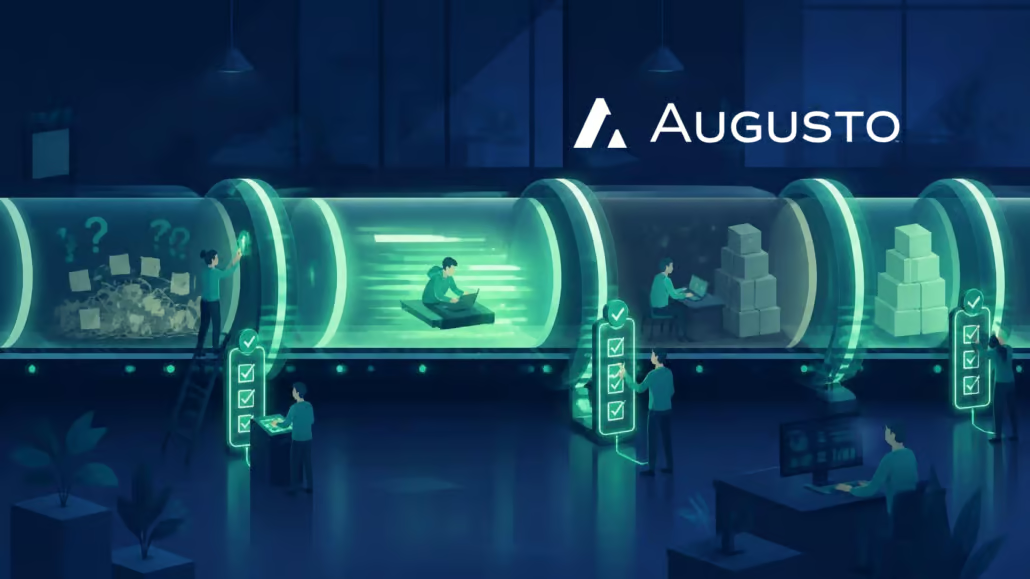
A 20-year-old system runs your operations. It works most of the time. Your team has learned its quirks. Replacing it feels reckless and necessary at the same time. That tension is why most legacy modernization projects either get postponed forever or blow up halfway through. There is a better path, and it does not require taking your business offline to find it.
The pattern that works in 2026 is phased modernization. Modernize legacy systems in deliberate slices, run old and new in parallel, and prove value before you move on. Here is how leading companies are doing it without disrupting the work that is keeping them in business today.
Why Big-Bang Replatforms Fail
A “rip and replace” project sounds clean on a slide. In practice, it concentrates risk into one terrifying weekend. Gartner predicts that more than 70% of mainframe exit projects will fail when teams overestimate what generative AI can do for the migration. The cutover is often where it goes wrong, exposing business logic nobody knew was buried in the old system.
The big-bang approach also stretches the team thin. You are operating the legacy system, building the new system, and training people on both. Productivity drops, defects climb, and stakeholders lose patience just when real progress requires more support, not less. Once you have committed to a single switchover date, rollback options shrink fast.
The Crawl, Walk, Run Method
Phased modernization replaces one giant decision with a series of smaller ones. Each phase delivers something usable on its own.
- Crawl: Pick a low-risk slice that is visible to the business. A new reporting dashboard, a single self-service workflow, or a refreshed customer portal. The goal is to validate your approach with a real but contained piece of work.
- Walk: Ship a second slice that depends on the first. Now you are exercising integration patterns, data sync, and the operational handoff between teams. This is where most teams either tighten up or notice they have built a fragile bridge.
- Run: Modernize systematically, retiring sections of legacy as new replacements prove themselves. By this point, the team has muscle memory for the work, and finance has seen enough wins to fund the longer arc.
What Parallel Builds Look Like in Practice
Running old and new in parallel is not about duplication for its own sake. It is about making the cutover boring. The pattern most teams use is the strangler approach. New functionality lives in the new system. The old system keeps running while traffic gradually shifts. The strangler pattern, popularized in Martin Fowler’s writing, has become the default for serious modernization work.
Three rules tend to keep parallel builds healthy. First, keep one system as the source of truth at a time; never both. Second, switch read traffic before write traffic so you can validate parity safely. Third, instrument both systems with the same metrics so you can compare behavior in production rather than in slide form.
Sequencing the First 90 Days
Modernization momentum is built early. The first 90 days set the tone for the whole effort.
Days 1 to 30: Discovery and shadow mode. Map every undocumented behavior of the legacy system. AWS publishes a useful legacy modernization assessment framework that many teams adapt as a starting point. Catalog every consumer of the old system before you touch anything.
Days 31 to 60: Ship the first parallel workflow to a small audience. Measure parity, error rates, and team comfort. This is also when you should pressure-test rollback procedures, because you will need them eventually.
Days 61 to 90: Run the first real cutover for that one workflow. Hold the next phase scope review with stakeholders armed with actual production numbers. From there, the work becomes a rhythm rather than a gamble.
Working with a partner who has shipped dozens of modernization projects compresses the timeline further, since the framework, integration patterns, and measurement plans are already battle-tested. The point is not to look brave. It is to keep your business moving while you replace its foundation.
The companies pulling ahead in 2026 are not the ones that replaced their stack in one heroic project. They are the ones who chose a phased path, made each slice provable, and kept production running the entire time.
Frequently Asked Questions
1. How long does a typical legacy modernization take?
A focused single-workflow modernization runs 8 to 14 weeks for the first usable version. A multi-workflow modernization typically spans 9 to 18 months when done in phases. The timeline depends more on the number of integrations and undocumented behaviors than on the technology choice itself. Phased work feels slower in the first month and noticeably faster after the second slice ships.
2. How do we deal with undocumented business logic in the old system?
Treat discovery as a real workstream, not a one-week prelude. Pair shadow mode with engineer interviews, read the old code with fresh eyes, and run real production data through the new system in passive mode. Most teams uncover meaningful new logic in the first six weeks of parallel running, which is exactly why a phased approach is safer than a single cutover.
3. Should we modernize to the cloud as part of this work?
Often yes, but not always. Cloud modernization brings flexibility, scalability, and security defaults, but it also adds change. If your team has zero cloud experience and the legacy system is stable, modernize the application logic first and migrate infrastructure as a second phase. Doing both at once is a common reason projects miss their goals.
4. What is the budget for a phased modernization?
Plan for 1.5 to 3 percent of annual operating revenue across the full program for mid-market companies. The upside is that phased budgeting matches phased delivery. You commit to the next slice, prove the return, and authorize the next one. That structure tends to survive leadership changes and budget reviews better than a single multi-year ask.
5. When should we keep the legacy system running indefinitely?
Keep it when it is stable, low-cost, and the workflow it supports is genuinely commodity. Some payroll engines, mainframe-backed accounting systems, and document repositories are best left untouched for years. The test is whether the legacy system is actively limiting growth. If it is not, the replacement budget often serves you better elsewhere.
Let's work together.
Partner with Augusto to streamline your digital operations, improve scalability, and enhance user experience. Whether you're facing infrastructure challenges or looking to elevate your digital strategy, our team is ready to help.
Schedule a Consult