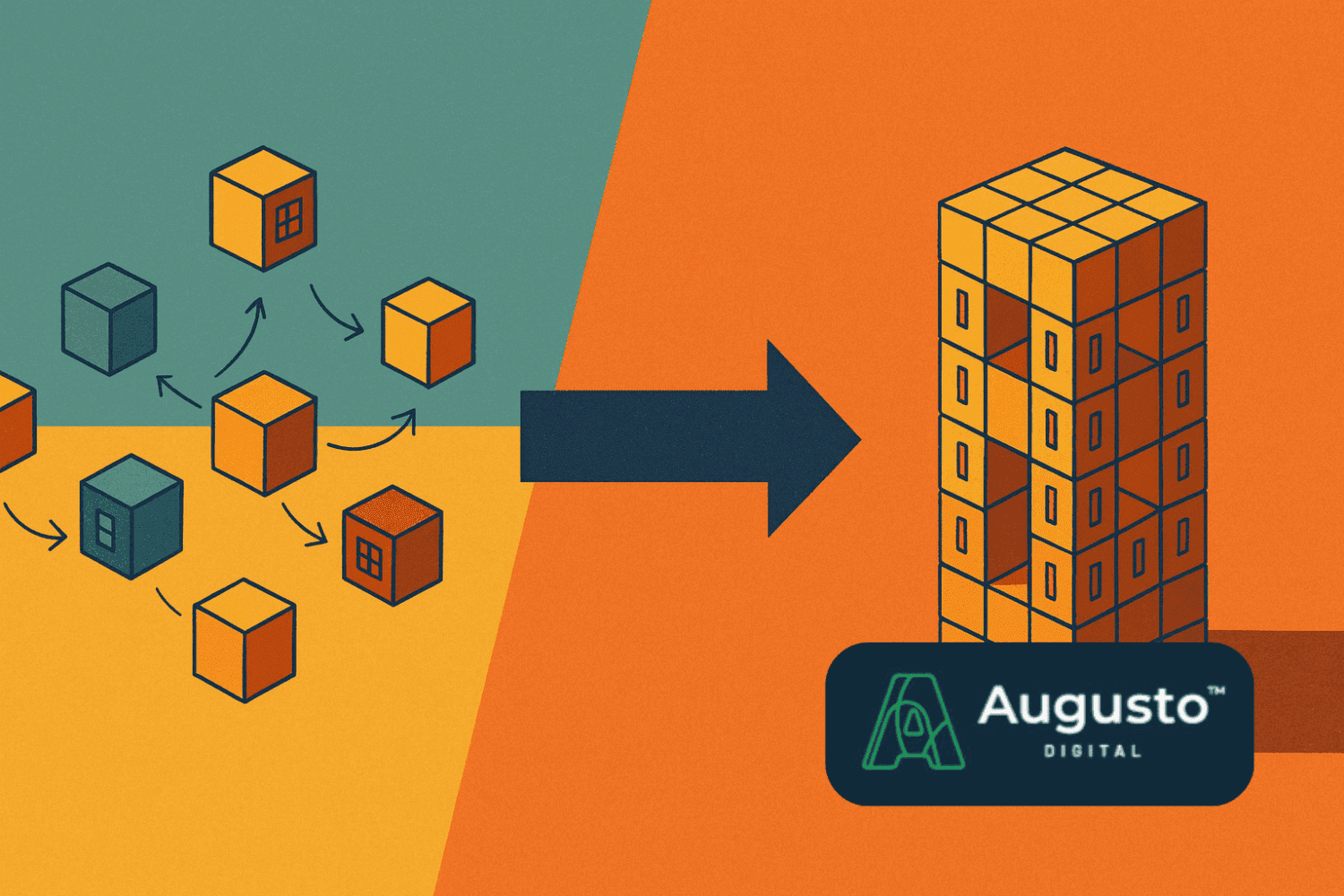
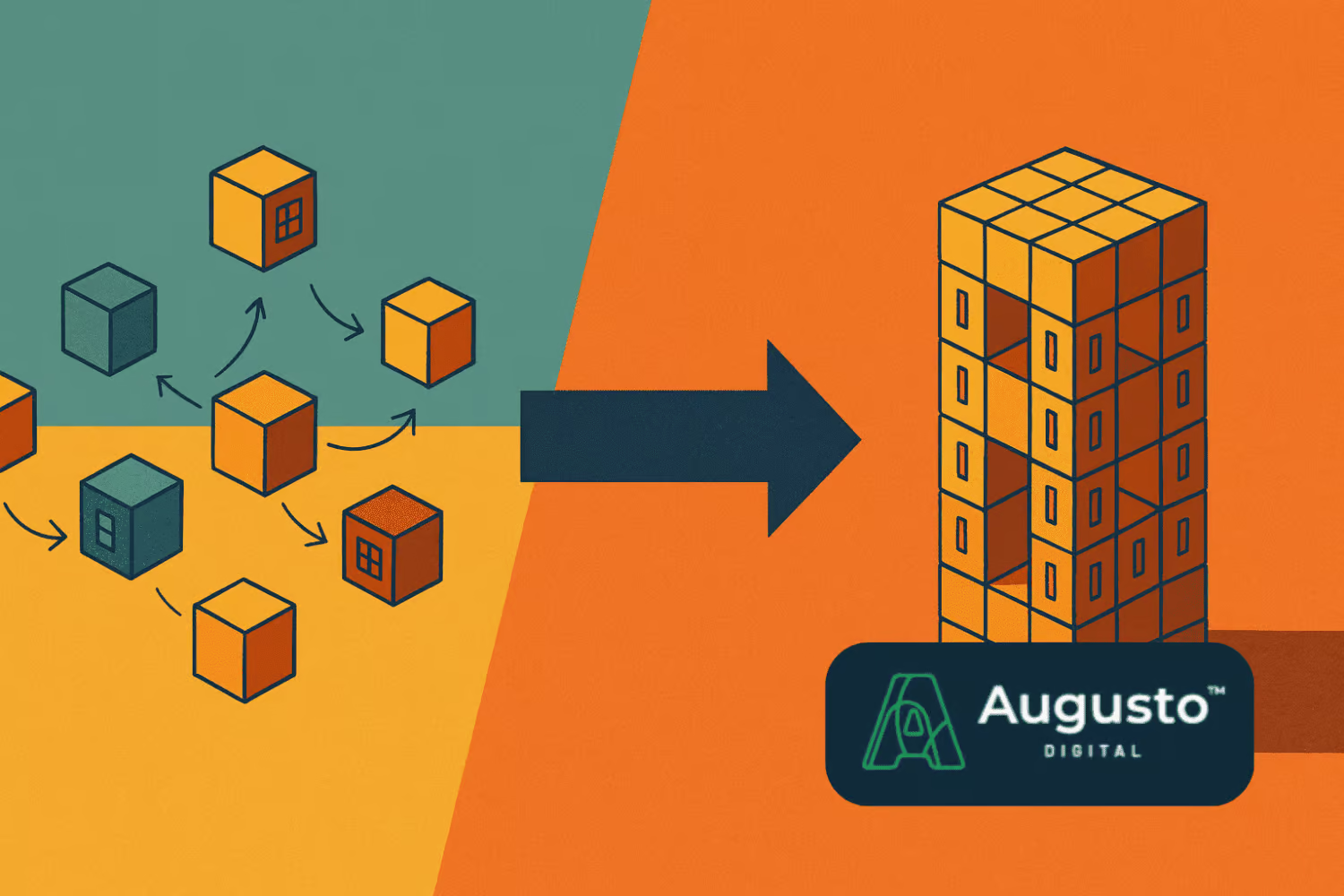
What if you could boost your project’s efficiency and reduce overhead using a less convoluted design strategy? Embracing monoliths allows organizations to shift focus from operational management to innovation. Tangible benefits like lower deployment and maintenance costs can follow. While microservices still offer scalability, monoliths provide integration advantages and strategic value for the right kinds of applications. Many organizations are rediscovering these benefits. Let’s take a closer look at the renewed interest in monolithic architecture and how it might impact software decisions.
The Strategic Return to Monolithic Architecture
The evolution of tech often swings like a pendulum. Right now, it is moving back toward monoliths. Some teams are rediscovering the operational ease, speed, and cost savings monolithic systems can offer. These are not outdated relics of the past. Instead, they are viable options for situations where speed and simplicity are essential.
Why Some Teams Are Choosing Monoliths Today
- Faster Time to Market: With a single cohesive codebase, monoliths simplify deployments and reduce friction. Teams can often move faster without managing dozens of APIs or service boundaries. For foundational design guidance, the 12-Factor App methodology provides helpful principles even when building monolithic systems.
- Lower Operational Overhead: Microservices require significant infrastructure management. For companies without large DevOps teams, monoliths can simplify operations.
- Easier Debugging and Testing: A single codebase typically leads to more straightforward QA cycles. Developers work within a unified system, which can streamline issue resolution. This benefit aligns with the guidance in “Monolith First” by Martin Fowler, which advocates for starting simple and evolving over time.
- Reduced Infrastructure Costs: Monoliths require fewer cloud services and orchestration tools. Hardware resources can be better utilized because the application runs under a single process, which simplifies scaling and reduces compute overhead.
- Simplified Security Management: With fewer endpoints and services, it becomes easier to enforce uniform security protocols. Microservices often require distinct authentication, authorization, and encryption layers across each service.
- Greater Data Consistency: Data synchronization challenges are minimized in monoliths because there is typically a single shared database, reducing the need for eventual consistency models and data pipelines.
Use Cases That Make Monoliths Practical
- Startups and Growth-Stage Companies: When speed, iteration, and fundraising milestones are top priorities, monoliths reduce infrastructure complexity and time-to-market friction.
- Internal Tools and Admin Portals: Applications that support internal workflows often benefit from a simpler architecture that doesn’t need the scalability microservices provide.
- Tightly Coupled Domains: If your business logic is deeply interconnected, keeping it together in one place reduces latency and synchronization challenges.
- Regulated Industries: Monoliths can simplify audit trails, access controls, and compliance reporting in industries like healthcare, finance, and insurance.
- Smaller Engineering Teams: When the team lacks deep DevOps experience or the bandwidth to maintain distributed systems, a monolith allows more focus on delivering features.
- Short-Term Projects or MVPs: For applications with a defined scope or time-boxed lifecycle, microservices are overkill. Monoliths simplify delivery and maintenance.
Addressing Common Challenges of Microservices
While microservices offer tremendous value in scaling large, complex systems, they come with real tradeoffs:
- Complex Service Management: Every service is its own mini-application. Maintaining, deploying, and monitoring multiple services can become a full-time job.
- Service-to-Service Communication: Inter-service calls can introduce latency, failure points, and additional integration work (e.g., gRPC, REST, queues).
- Higher Security Surface Area: Each service needs its own secure access controls, which multiplies the complexity.
- Testing Difficulties: End-to-end testing of microservices environments can be brittle, requiring mocks, contracts, or dedicated test environments.
- Operational Burden: Monitoring, logging, CI/CD pipelines, and cloud infrastructure balloon as services multiply.
Real-World Perspective
Some Augusto clients have leveraged monolithic architectures to accelerate development and streamline operations. For example, in past projects, reduced infrastructure complexity contributed to meeting aggressive product timelines. These decisions were driven by project-specific needs and technical constraints. In one case, a monolithic approach enabled a startup to ship in six weeks instead of six months, meeting payer contract deadlines and launching on time.
A Decision Framework: Which Architecture Fits Your Team in 2026
The useful question is not “monolith or microservices” in the abstract — it is which one matches your team, your traffic, and your operational maturity right now. Five checks usually settle it.
- Team topology. Microservices pay off when independent teams need to deploy independently. If one team owns the whole product, service boundaries mostly add coordination cost without buying autonomy.
- Scaling shape. If a single component — search, media processing, inference — needs to scale differently from everything else, isolate that component. If load rises and falls uniformly, a well-structured monolith scales fine horizontally.
- Operational maturity. Distributed systems require distributed tracing, centralized logging, service discovery, and a real on-call practice. Without those, microservices trade a codebase problem for a much harder debugging problem.
- Domain clarity. Boundaries drawn before the domain is understood become the wrong boundaries, and moving them across services is far more expensive than refactoring modules. Start modular, extract once the seams are proven.
- Cost model. Every service adds infrastructure, network hops, and observability spend. That is a fair price for autonomy and independent scaling — and pure overhead without them. The same placement logic applies to where those workloads run; see the benefits of cloud computing.
The Modular Monolith: The Default Worth Starting From
For most teams the strongest starting point is a modular monolith: one deployable unit with strictly enforced internal boundaries, separate domain modules, and no cross-module reach-arounds. You keep single-deploy simplicity and local transactions while preserving the seams you would need to extract a service later. Extraction then becomes an evidence-driven decision — this module has a different scaling profile, or a different team owns it — rather than an upfront bet.
If You Are Carrying an Existing System
Most of these decisions are not greenfield. If the real constraint is an older platform you cannot take offline, sequencing matters more than the target architecture: see how to modernize legacy systems without operational downtime. And if part of the answer is buying rather than building, when custom software beats SaaS — and when it does not is the companion decision.
Conclusion: It’s About Strategy, Not Dogma
Choosing between a monolith and microservices depends on the context. Business goals, technical resources, team maturity, and growth projections all play a role. The right architecture is the one that helps teams deliver value early and evolve effectively. Starting with a monolith doesn’t mean it can’t evolve. Modular monoliths and service extraction later are valid paths.
Augusto helps clients evaluate architectural decisions based on outcomes. Whether building from scratch or modernizing, our goal is to align technology choices with business priorities.
Let’s talk
If you’re weighing architectural strategies, we can help you evaluate tradeoffs and move forward with clarity and confidence.
Let's work together.
Partner with Augusto to streamline your digital operations, improve scalability, and enhance user experience. Whether you're facing infrastructure challenges or looking to elevate your digital strategy, our team is ready to help.
Schedule a Consult